
Your lesson workspace
Watch, read and use the supporting resources before continuing.
Overview of UK Secondary Qualifications
Overview of UK Secondary Qualifications
BETA
UK secondary qualifications include a range of pathways such as GCSEs, A-levels, vocational qualifications, and alternative qualifications like BTECs and IB diplomas. GCSEs are typically taken at the age of 16, covering a variety of subjects and providing a foundation for further education or training. A-levels are advanced qualifications that usually follow GCSEs, allowing students to specialize in specific subjects for university entry. Vocational qualifications offer practical skills and are geared towards specific trades or industries, often combining classroom learning with workplace experience. The International Baccalaureate offers a rigorous curriculum aimed at preparing students for global opportunities in higher education. Each pathway has distinct features and serves different educational and career aspirations, making it crucial for students to understand their options as they plan their future.
Stages of UK Education:
Stages of UK Education:
The UK education system involves 13 years of compulsory schooling (Years 1-13) from around age 5 to 18, covering Primary (Years 1-6), Secondary (Years 7-11), and Sixth Form/Further Education (Years 12-13) for A-Levels or vocational training, before university. While students often finish core secondary education (GCSEs) at 16 (Year 11), they usually continue for two more years (Years 12 & 13) for advanced qualifications, making it a 13-year path to university entry. Unlike other countries that only require 12 years of studies before University entry, UK students MUST complete the full 13 years of studies before being eligible to apply to university.
-
Early Years / Foundation Stage
- Age: 3–5 years
- Setting: Nursery or Reception
- Focus on basic skills: literacy, numeracy, social development
-
Primary Education
- Age: 5–11 years
- Key Stages:
- Key Stage 1: Ages 5–7
- Key Stage 2: Ages 7–11
- Subjects: English, Maths, Science, Humanities, Arts, PE
-
Secondary Education
- Age: 11–16 years
- Key Stages:
- Key Stage 3: Ages 11–14
- Key Stage 4: Ages 14–16
- Students study a broad range of subjects leading to:
- GCSEs / IGCSEs (core qualification at age 16) – taken at the end of year 11
- Vocational alternative: BTEC Level 2
-
Post-16 / Further Education (Sixth Form or College)
- Age: 16–18/19 years – Years 12 and 13.
-
- General Certificate of Education Advanced Levels (GCE A-Levels) – academic pathway – taken in the 13th year.
- AS Levels – taken in the 12th year. Previously used to contribute to 50% of the A-level grade, but it is now a separate qualification and no longer counts towards A-levels and cannot be used on its own to apply to university.
- BTEC Nationals – vocational pathway, accepted by some universities.
- Access To Higher Education Diploma (Access Course) – a 1 or 2-year course, accepted by some universities.
- International Baccalaureate (IB) Diploma – international academic pathway, usually accepted by all universities.
-
Higher Education
- Age: 18+
- Qualifications:
- Undergraduate: Bachelor’s degree (3–4 years)
- Postgraduate: Master’s degree (1–2 years), Doctorate / PhD
- Higher Nationals (HNC/HND) – vocational route to university or professional careers
-
Adult / Continuing Education
- Professional qualifications, vocational training, short courses
- Flexible and varies by career and personal development goals
-

Key UK Secondary Qualifications
Key UK Secondary Qualifications
-

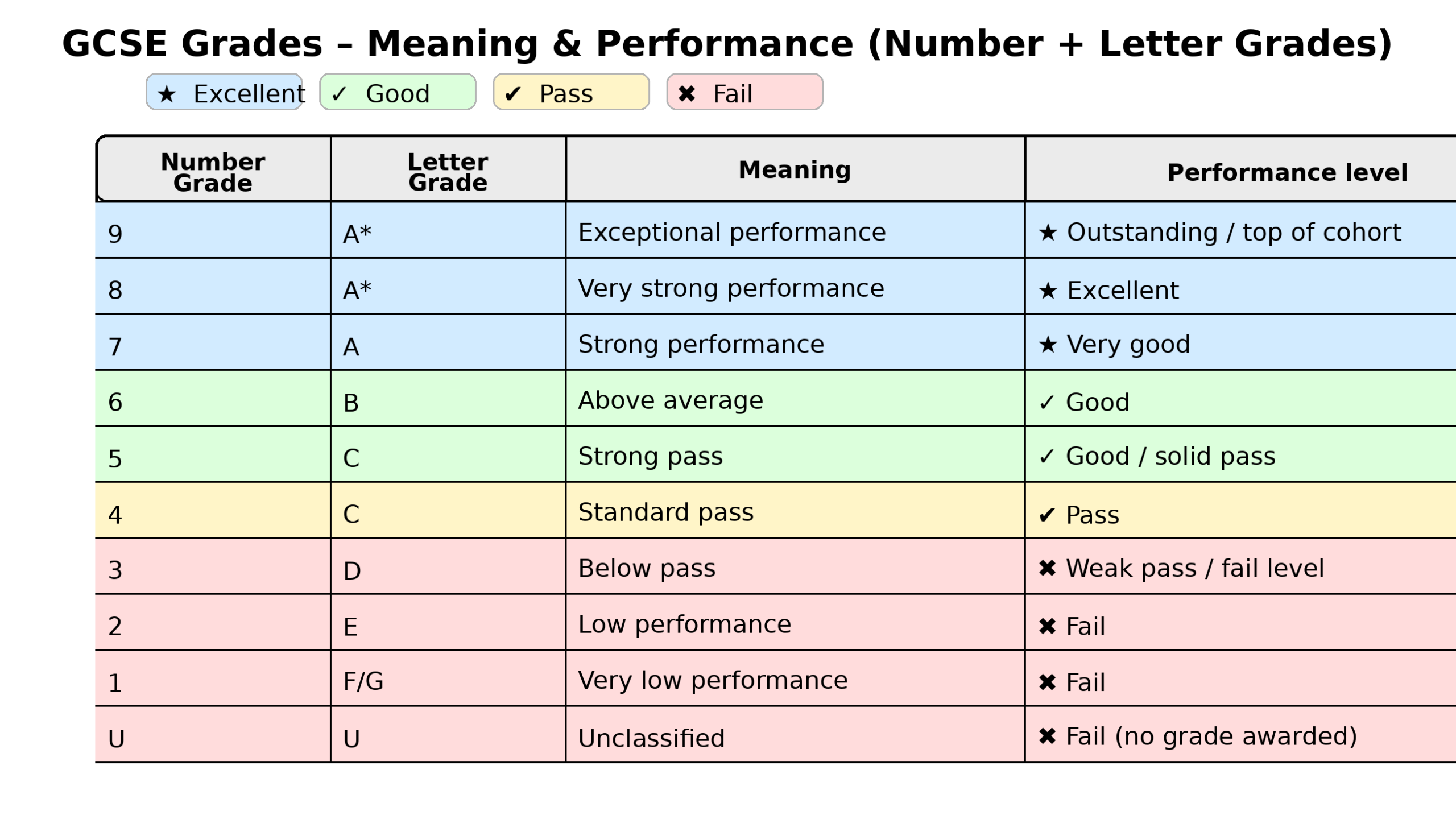
GCSEs are essential qualifications taken at ages 14 to 16 in the UK, covering core subjects like English, Maths, and Science. They are graded from 9 to 1.
-

The IGCSEs are an international version of GCSEs, graded A–G* or 9–1, aimed at students worldwide for standardized education.
-

AS Levels are qualifications taken at ages 16 to 17, lasting one year, allowing students to specialize in subjects before A Levels.
-

A Levels are crucial for university admissions in the UK, taken from ages 16 to 18, and graded from A to E*. They require in-depth study.
GCSEs and IGCSEs
GCSEs and IGCSEs
GCSEs are indeed a vital part of the education system, laying the groundwork for future studies and career paths. The flexibility of IGCSEs allows international students to gain qualifications that are widely recognized while following a curriculum that may better suit their educational backgrounds. Both qualifications support students in developing essential skills and knowledge across a range of subjects.
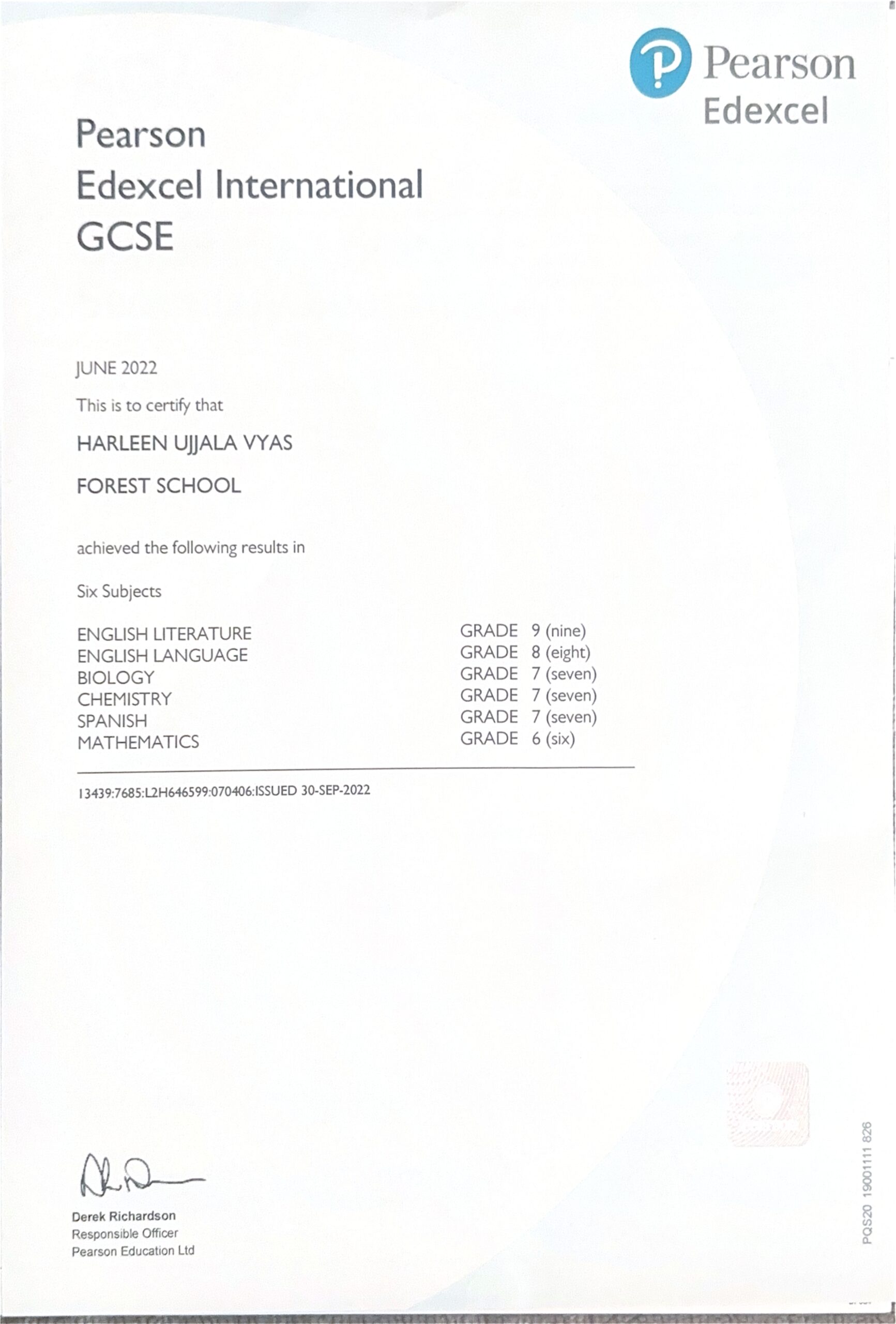
IGCSE Certificate
The IGCSE (International General Certificate of Secondary Education) is an internationally focused qualification, commonly offered by UK exam boards such as Cambridge or Pearson Edexcel but taken largely outside the UK.
Key characteristics:
- Issued as a final certificate
- Internationally recognized and equivalent in level to GCSEs
- Shows final awarded grades
- Accepted by UK and international universities
- Often used by international applicants as their secondary qualification
This document is an official qualification certificate and can be used directly for applications, certification, or apostille where required.
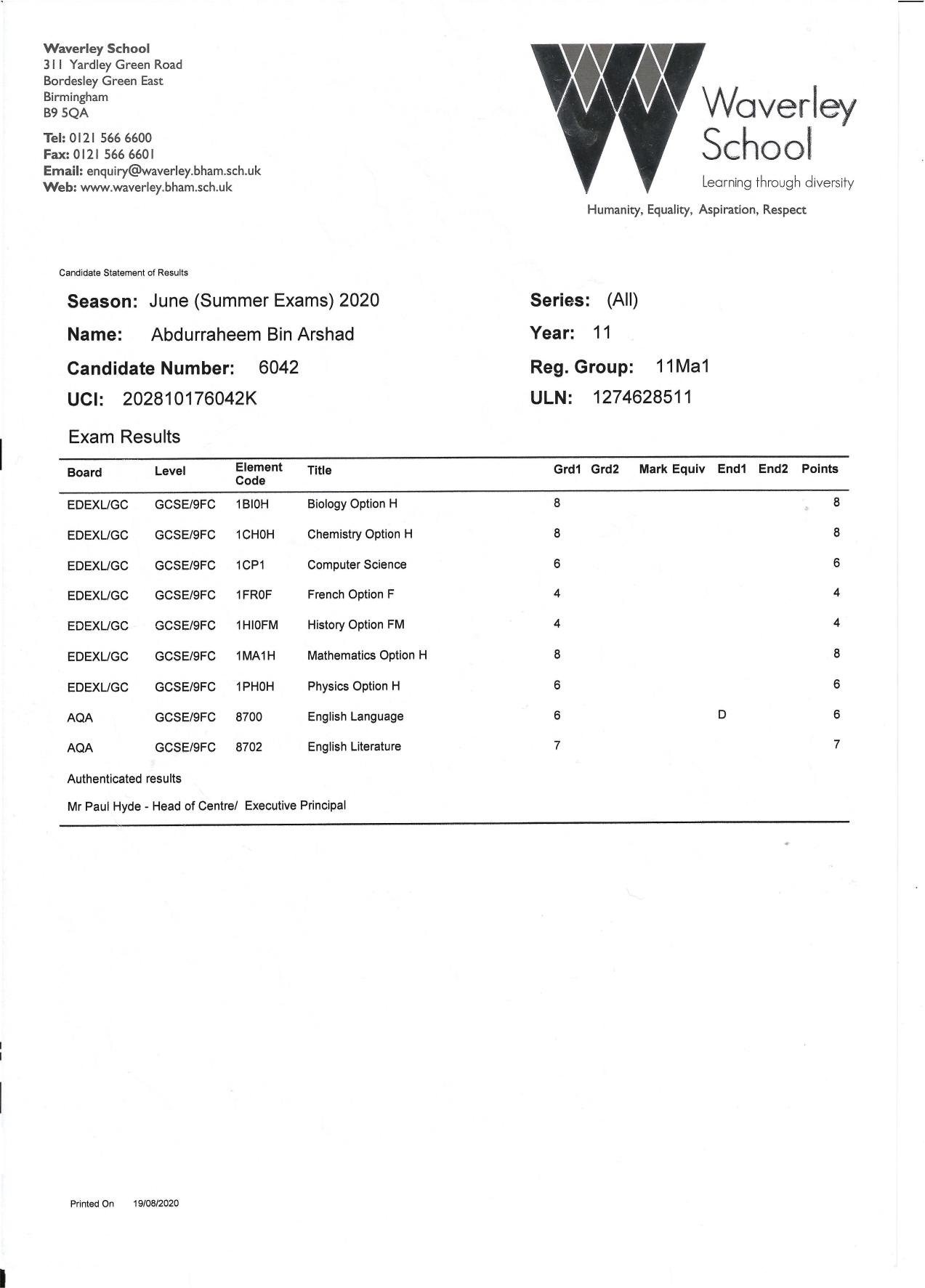
GCSE Statement of Provisional Results
The GCSE Statement of Provisional Results is a results slip, not a certificate.
Key characteristics:
- Issued shortly after exams results are released
- Shows subjects taken and grades achieved
- Marked as “provisional”
- Intended for temporary use only
- Not a final qualification document
This document is typically used for early applications or conditional offers, Universities will normally request the final GCSE certificate at a later stage.
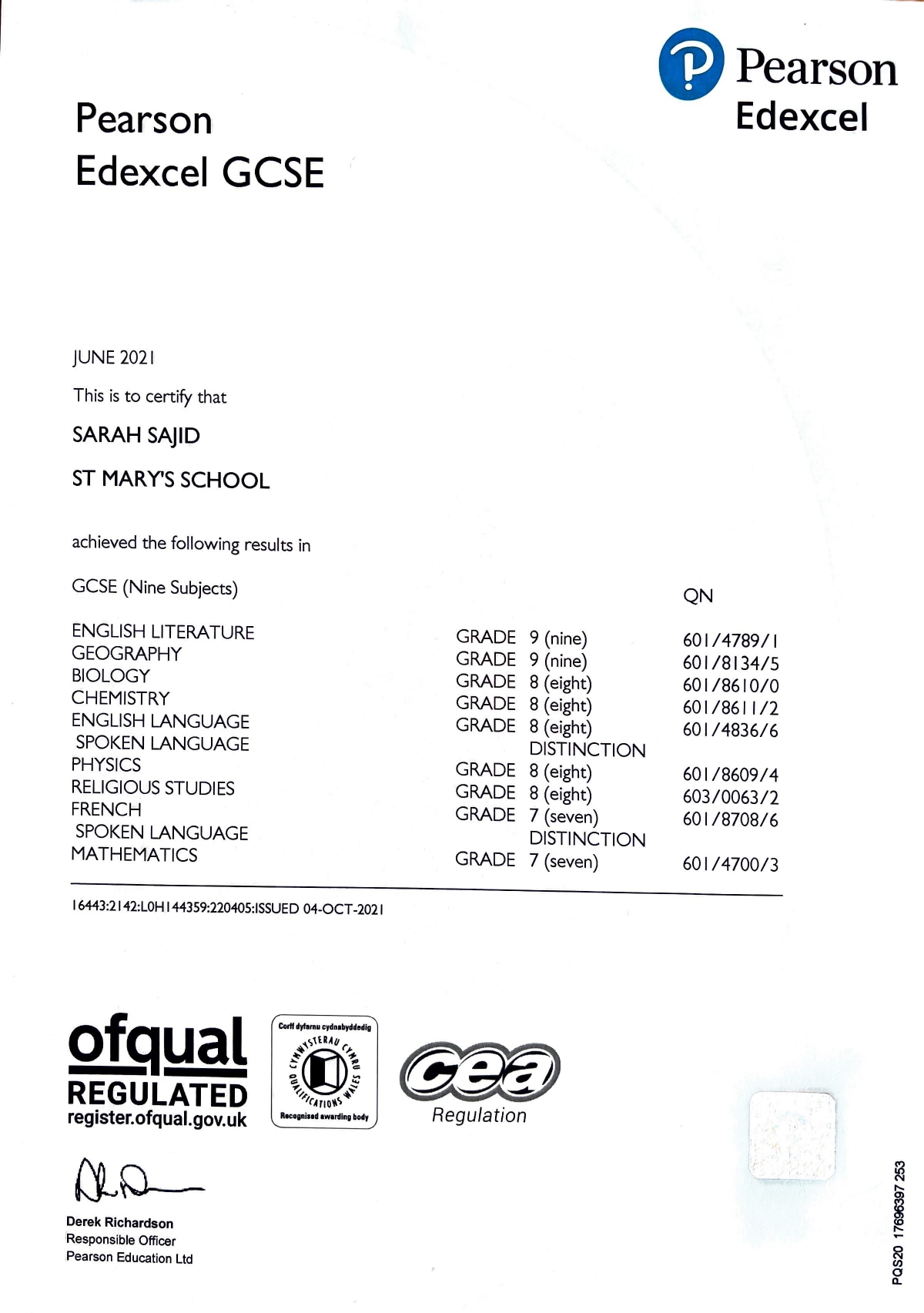
Standard GCSE Certificate
The standard GCSE certificate is the official and final qualification issued in the UK.
Key characteristics:
- Issued by the awarding body (e.g. AQA, OCR, Pearson Edexcel)
- Confirms final and permanent results
- Required for official verification, certification, and apostille
- Used for university admissions and legal purposes
A Levels and AS Levels
A Levels and AS Levels
A Levels are indeed a significant pathway for students aged 16–18 in the UK, with a focus on depth of study in various subjects over two years. The qualifications play a crucial role in university admissions, and the grading system helps to assess students’ understanding and performance in their chosen subjects. AS Levels serve as an important stepping stone, allowing students to gauge their strengths and interests before committing to full A Levels in the second year.
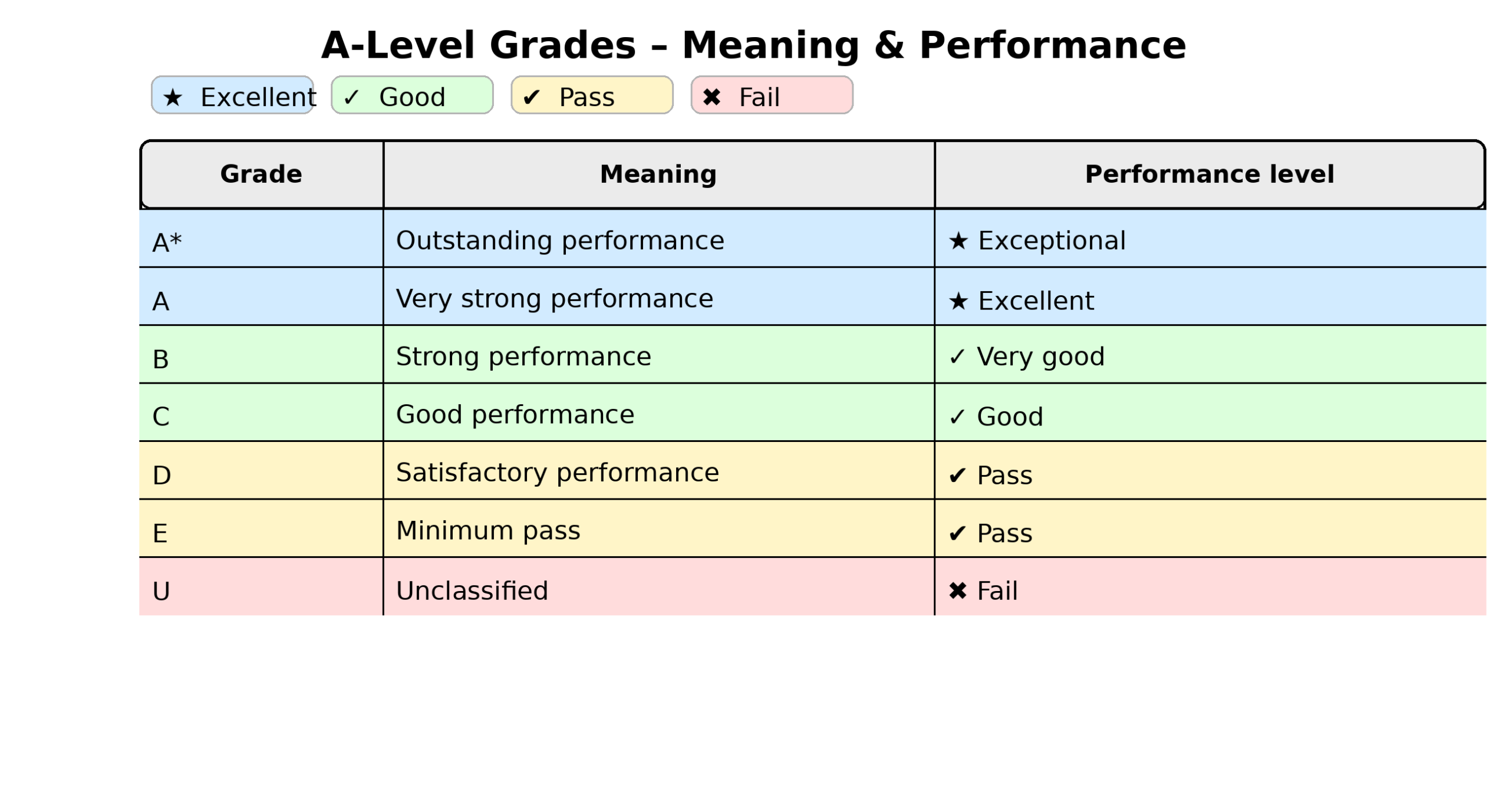
An AS Level certificate is an official qualification awarded for completing an AS Level (Advanced Subsidiary Level), which is part of the UK GCE system and is the first year of the full A-level qualification.
- Taken after GCSEs, usually at age 16–17
- Shows the subject and final grade (A–E)
- Issued by the exam board
- Can be a stand-alone qualification or part of a full A Level.
AS Levels may support university applications, but do not replace full A Levels and CANNOT be used on their own for university applications.
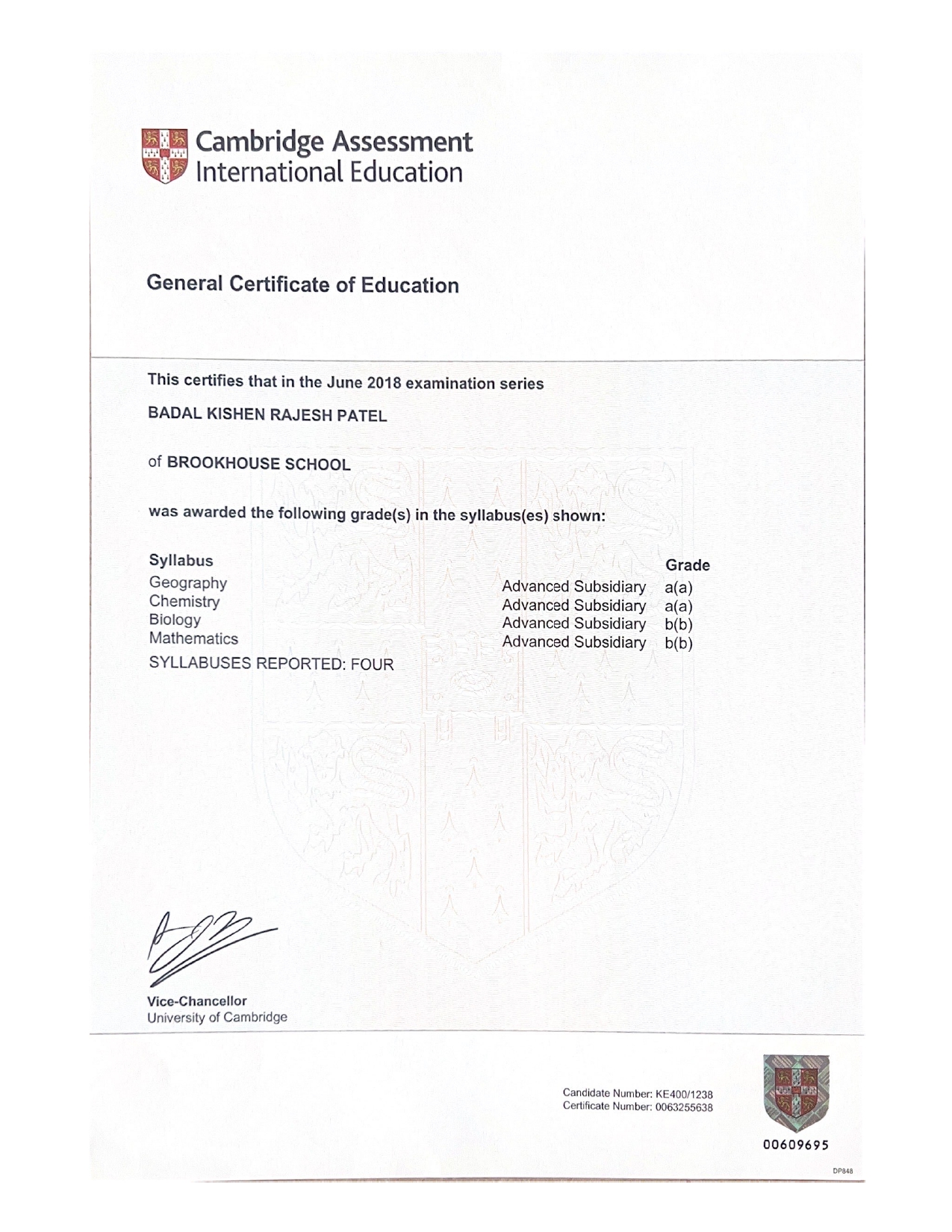
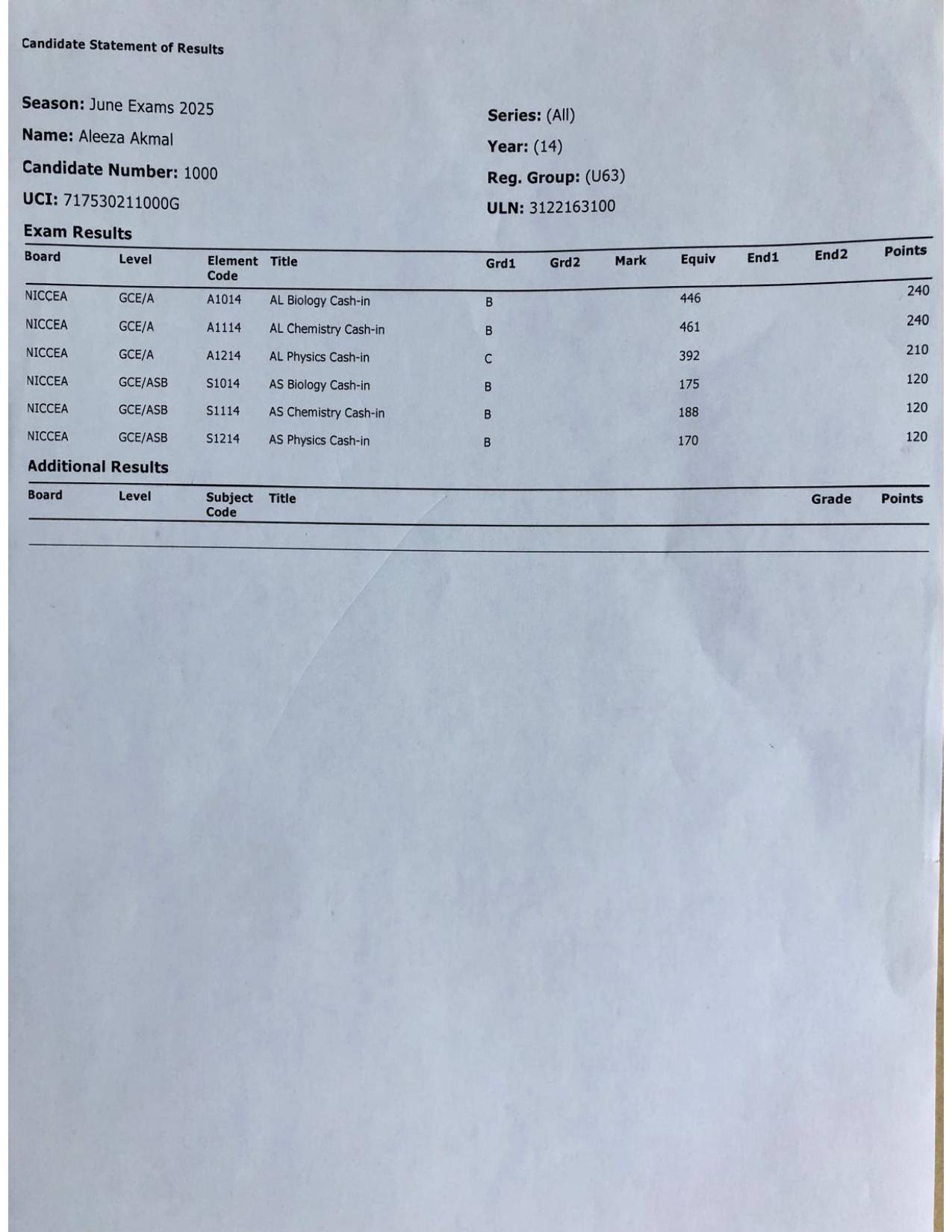
A Statement of Provisional Results for A Levels is a temporary results document issued by the exam board or school shortly after A Level results are released.
- Shows the subjects taken and grades achieved
- Marked as provisional
- Issued before the final A Level certificates
- Used for early university applications or conditional offers
- Not a final qualification document
- Usually not accepted for apostille or formal verification
Universities will normally require the official A Level certificate once it is issued.
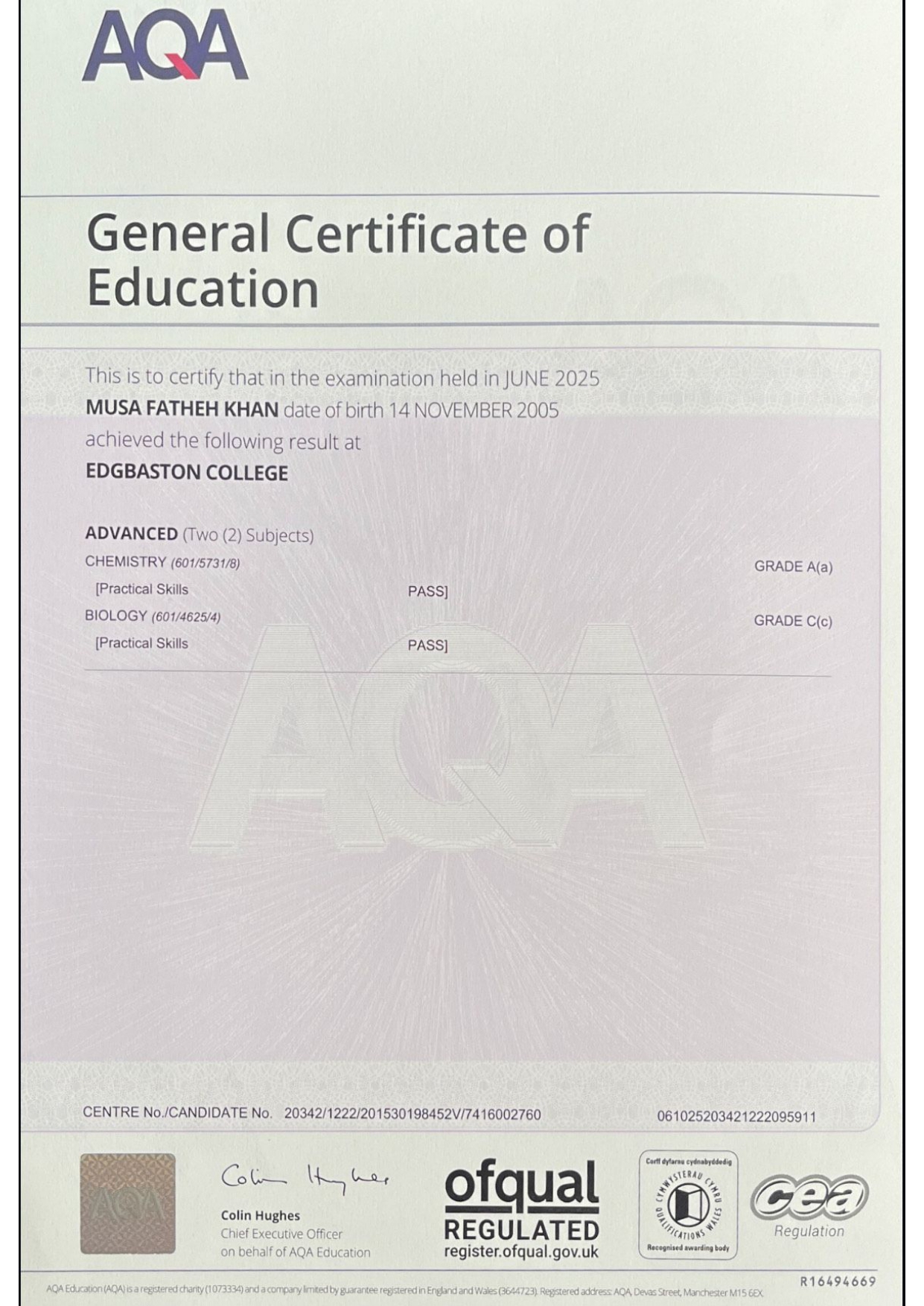
An A Level certificate is the official final qualification document issued by a UK exam board after a student has completed the full A Level (Advanced Level) programme.
- Taken after GCSEs, usually at age 16–18
- Classified as a Level 3 qualification
- Lists the subjects studied and final grades (A–E)*
- Issued by the awarding body (e.g. AQA, OCR, Pearson Edexcel)
- Used for university admissions, certification, and apostille
This certificate confirms the student’s final and permanent results and replaces any provisional results statements.
Main UK Exam Boards
Main UK Exam Boards
A UK exam board is an official organization responsible for setting, assessing, and awarding qualifications in the UK education system.
-
AQA (Assessment and Qualifications Alliance)
Issues GCSEs, AS Levels, and A Levels -
Pearson Edexcel
Issues GCSEs, International GCSEs (IGCSEs), AS Levels, and A Levels -
OCR (Oxford, Cambridge and RSA)
Issues GCSEs, AS Levels, and A Levels -
WJEC (Welsh Joint Education Committee)
Issues GCSEs and A Levels (mainly in Wales) -
Eduqas (part of WJEC)
Issues GCSEs and A Levels, mainly used by schools in England
International / UK-Based Boards
International / UK-Based Boards
-
Cambridge Assessment International Education (CAIE)
Issues IGCSEs and International AS & A Levels -
Pearson Edexcel
Issues International GCSEs (IGCSEs), AS Levels, and A Levels
BTEC Qualification
BTEC Qualification
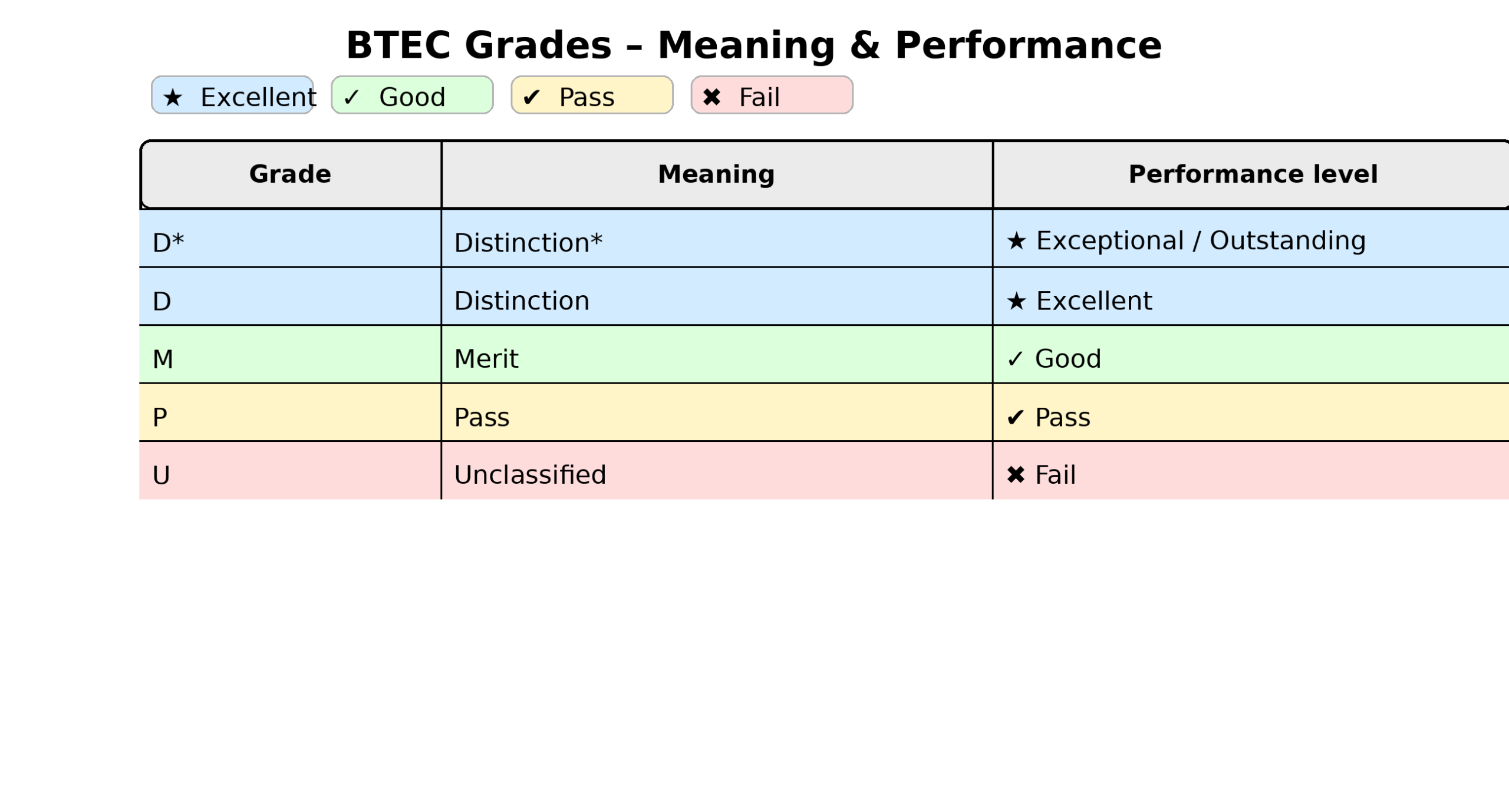
BTEC stands for Business and Technology Education Council and refers to vocational qualifications offered in the UK.
-
A practical, career-focused qualification
-
Available at Level 1 to Level 7 (secondary to higher education)
-
Commonly taken at Level 2 (GCSE equivalent) and Level 3 (A Level equivalent)
-
Assessed mainly through coursework, with some exams
Common BTEC Levels
Common BTEC Levels
-
BTEC Level 2 → Equivalent to GCSEs
-
BTEC Nationals Level 3 → Equivalent to A Levels (e.g. Extended Diploma = 3 A Levels)
-
BTEC consist of BTEC Diploma and Notification of Performance ( transcript )
BTEC L2 Sample
BTEC L2 Sample
BTEC L3 / Extended Diploma Sample
BTEC L3 / Extended Diploma Sample
Access Course
Access Course
An Access Course—formally called an Access to Higher Education (HE) Diploma—is a Level 3 qualification designed to help adults without traditional qualifications (like A-levels) progress to university.
What it’s for
An Access to HE Diploma is mainly for people who:
- Left school without A-levels
- Want to return to education after a break
- Need a recognized qualification to enter university
It’s widely accepted by UK universities as an alternative to A-levels.
Key features
- Level: Level 3 (same level as A-levels)
- Duration: Usually 1 year full-time (some part-time options exist)
- Focus: Academic preparation + subject knowledge
- Assessment: Coursework, assignments, projects (usually no final exams)
.
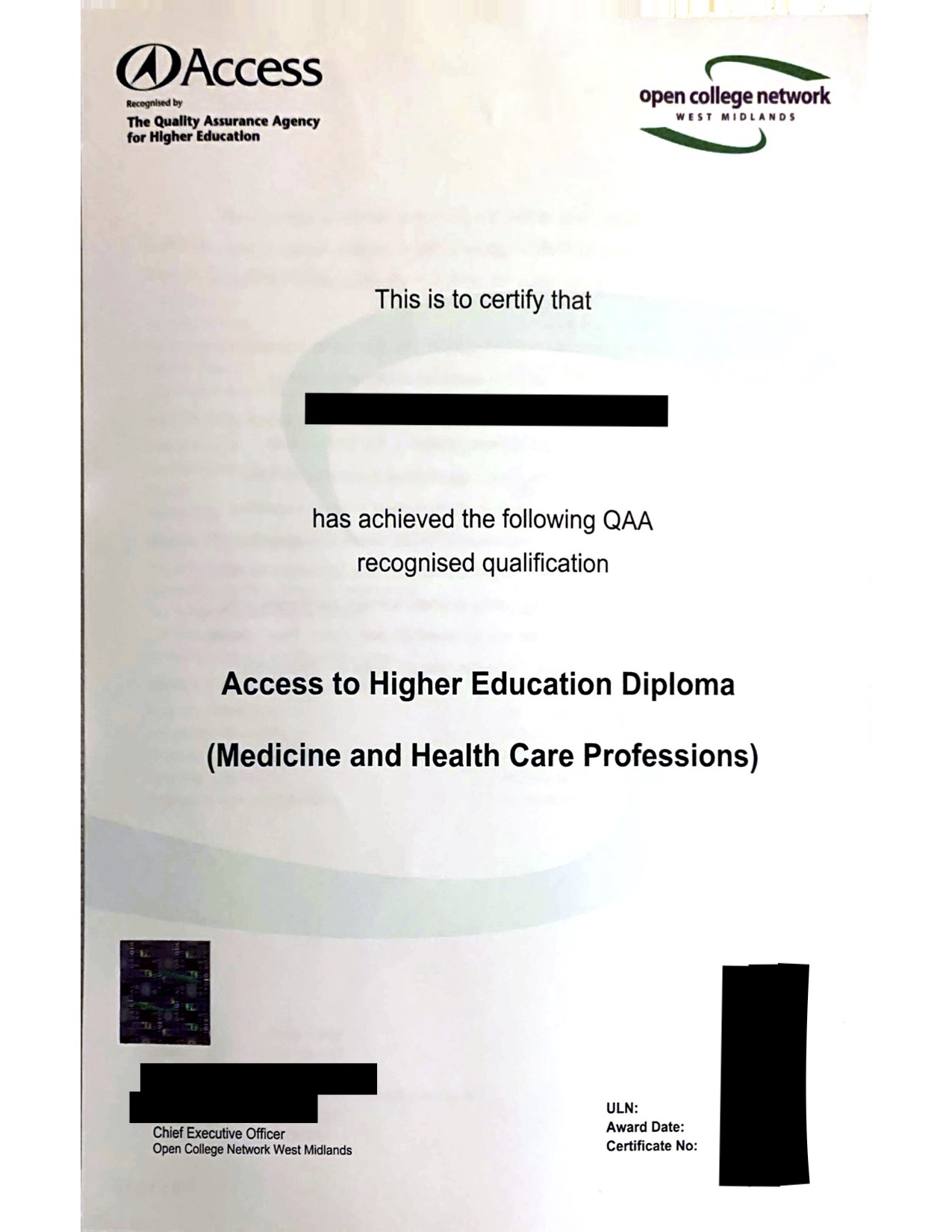
Access to HE Diploma Certificate
- 1 page
- Confirms you have been awarded the qualification
- Shows the qualification title, awarding body, and completion date
- This is the main certificate
Access to HE Diploma Transcript / Record of Achievement
- 2–4 pages (can vary by awarding body)
- Lists all units studied
- Shows credit values and grades (Pass / Merit / Distinction)
- Universities rely heavily on this document
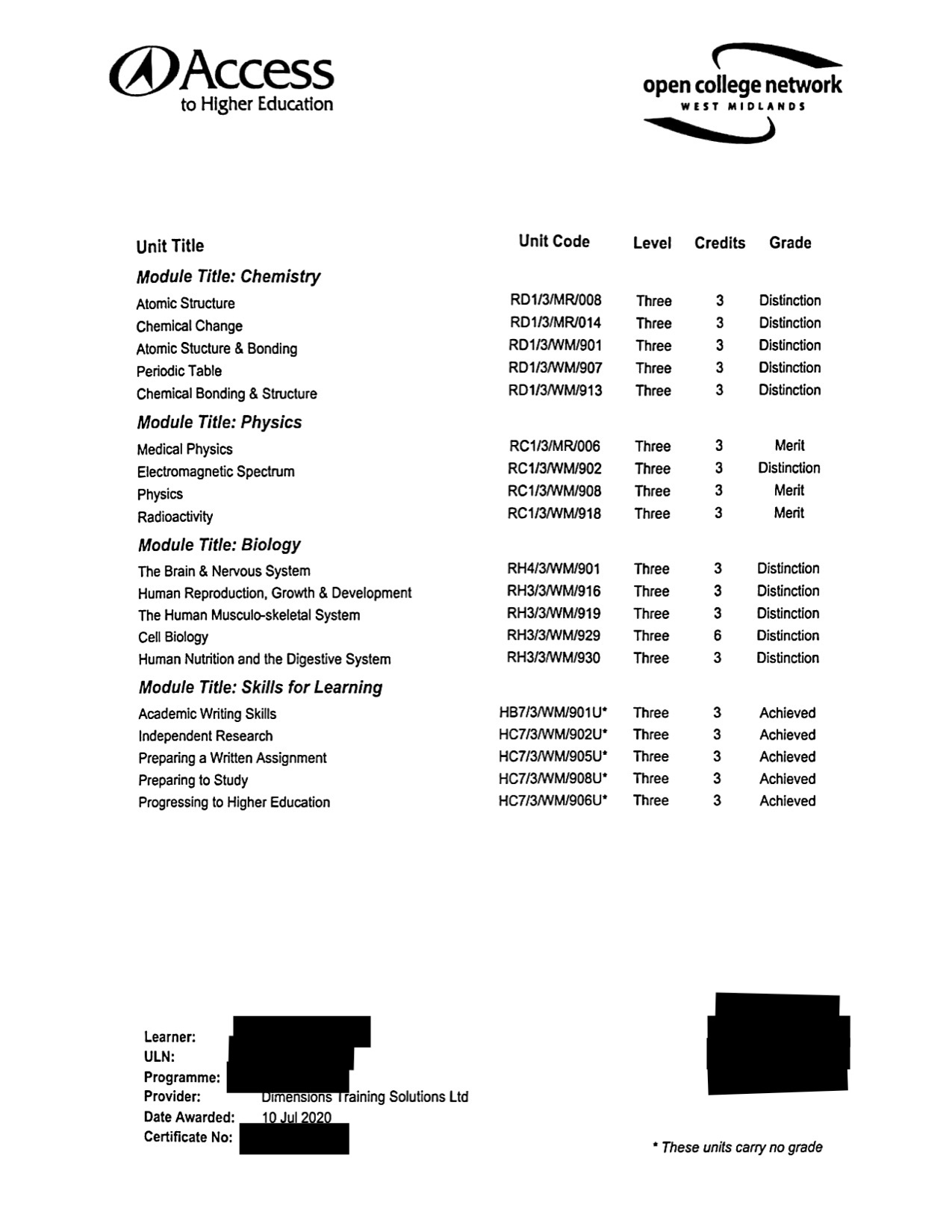
Applicant must submit both the Access to HE Diploma Certificate and the Access to HE Diploma Transcript / Record of Achievement
IB Diploma Programme or IBDP
IB Diploma Programme or IBDP
The IB Diploma (often written IB Diploma Programme or IBDP) is an internationally recognized pre-university qualification for students aged 16–19, offered by the International Baccalaureate (IB).
What “IB Diploma” means
IB = International Baccalaureate
IB Diploma = a Level 3–equivalent qualification, similar in level to:
- UK A-levels
- Access to HE Diploma
- BTEC Level 3
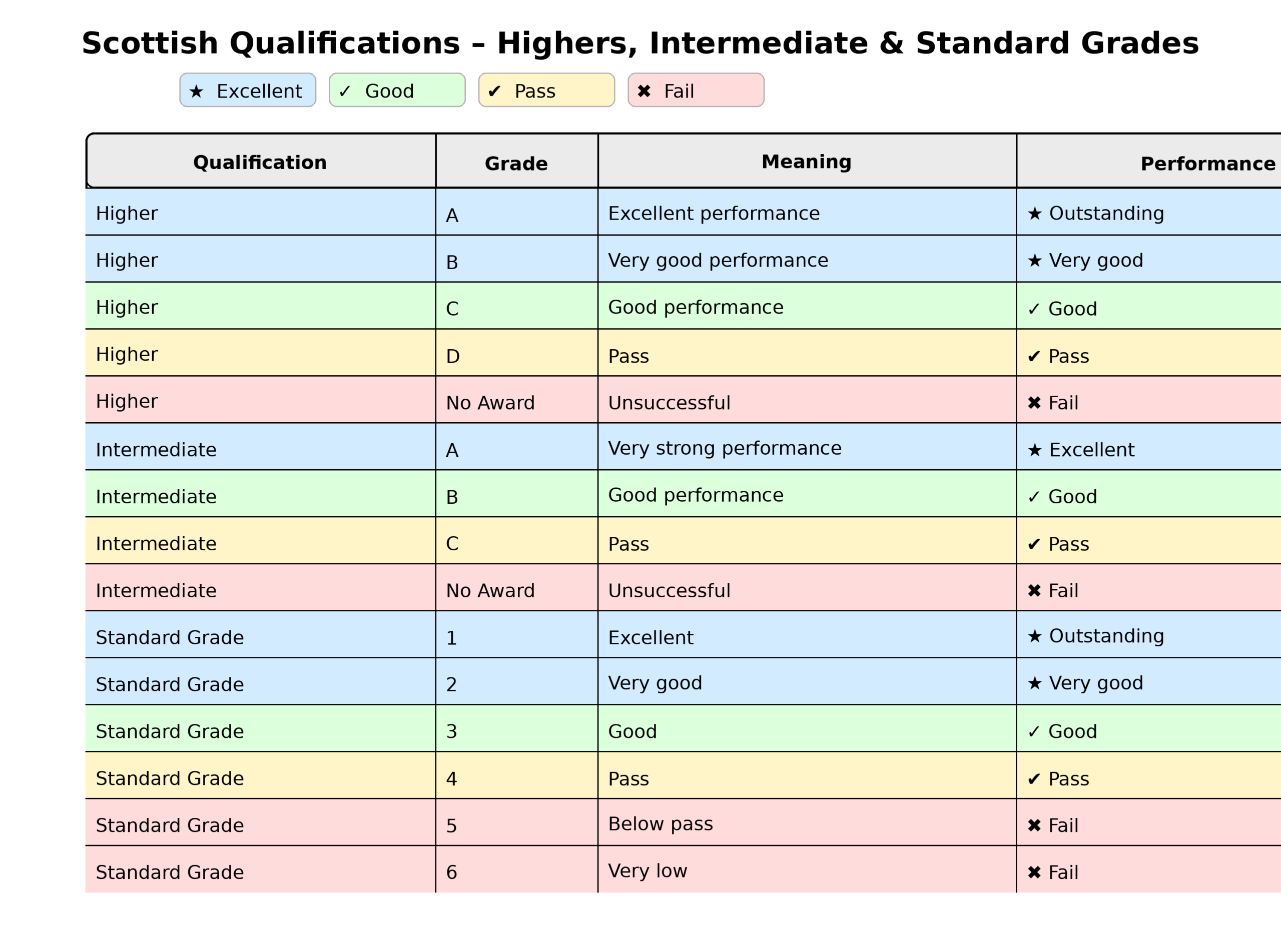
- Scottish Highers
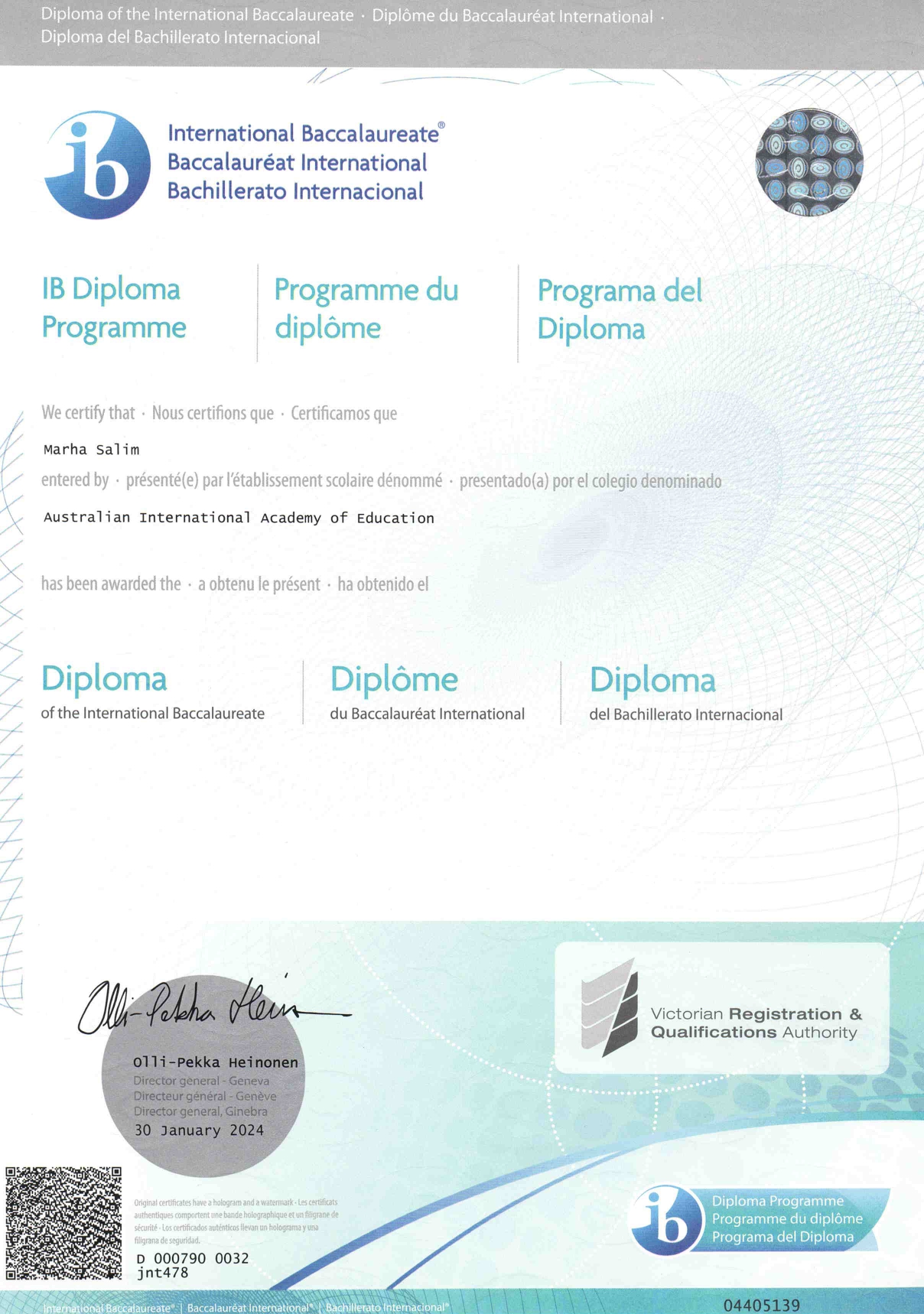
IB Diploma Certificate
- 1 page
- Confirms the award of the International Baccalaureate Diploma
- Shows the candidate’s name, session (e.g. May 2024), and diploma award
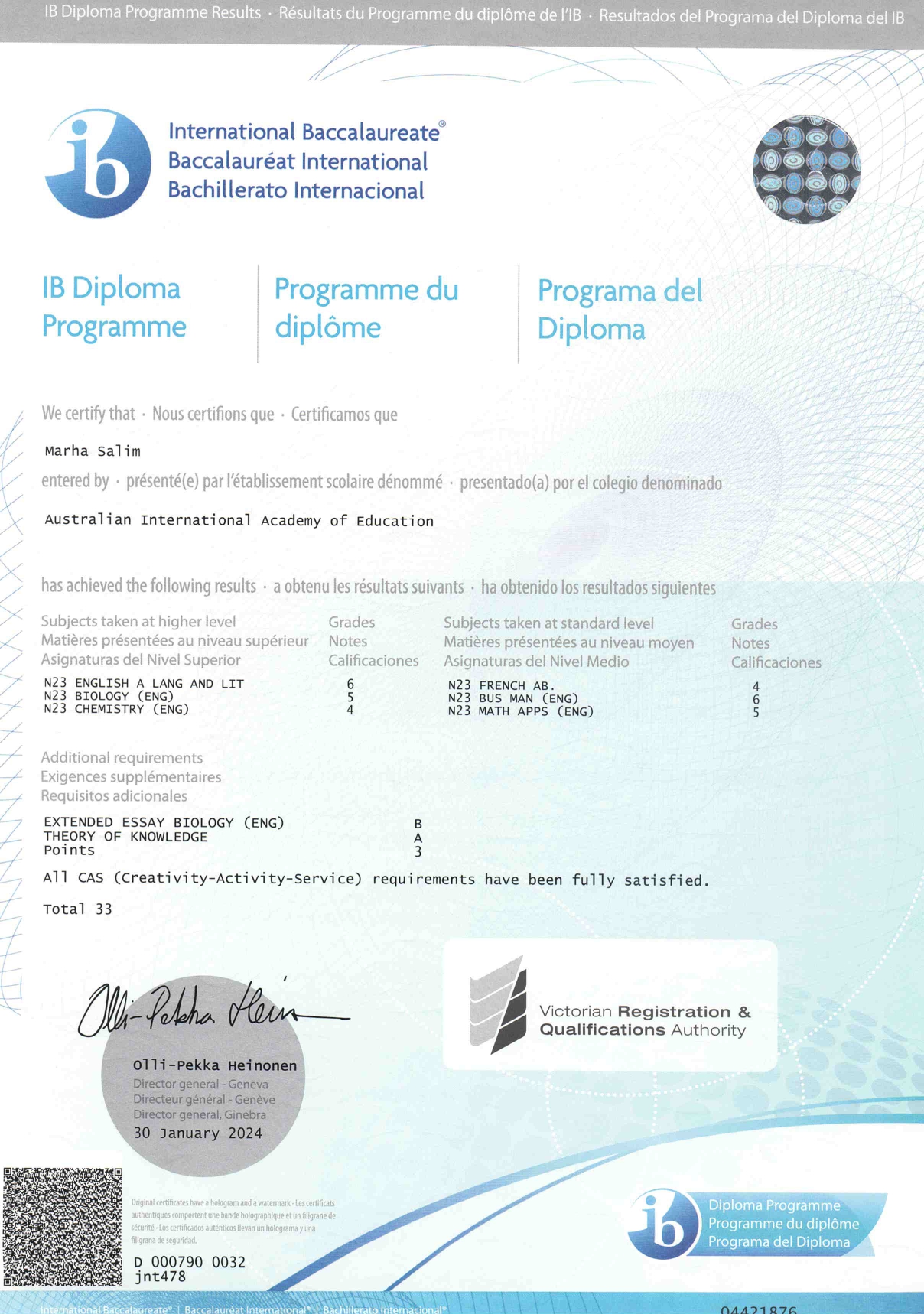
IB Diploma Results / Transcript (IB Statement of Results)
- 1–2 pages
- Lists:
-
- All subjects taken (HL and SL)
- Grades (1–7)
- Total points (out of 45)
Scottish Highers
Scottish Highers
Scottish Highers are part of the UK qualification system, but they are specific to Scotland.
-
Official name: Scottish Highers (often just “Highers”)
-
Country: Scotland (within the UK)
-
Regulated by: Scottish Qualifications Authority (SQA)
-
Students need at least 3 ‘Highers’ subjects to be eligible to apply to university